
Why use Biochar

Healthier soil. Smarter inputs. Carbon put to work.

Biochar gives farms, gardens, landscapes, filtration systems, and restoration projects a practical way to improve performance while storing carbon for the long term.

One material. Connected benefits.

Make every drop, nutrient, and season work harder.

“Biochar is a shovel-ready solution that not only removes emissions but also provides a host of social and economic co-benefits.”

International Biochar Initiative
Retainswater and nutrients
Supportsroots and soil life
Improvesresilience and efficiency
Captures & Storesatmosphere carbon
Six reasons to use Biochar

Benefits that reinforce one another.

Biochar is not a single-purpose input. Its porous, carbon-rich structure will support several parts of an environmental system at the same time.

01

Supports Crop Performance

When Biochar is matched to the soil, crop, and application method, it will improve the root-zone micro-environment. Improved water availability, nutrient retention, aeration, and microbial activity will help plants establish and perform more consistently through changing conditions.

Useful for: farms, vineyards, orchards, nurseries, greenhouses, gardens, and managed landscapes.

02

Water & Nutrient Retention

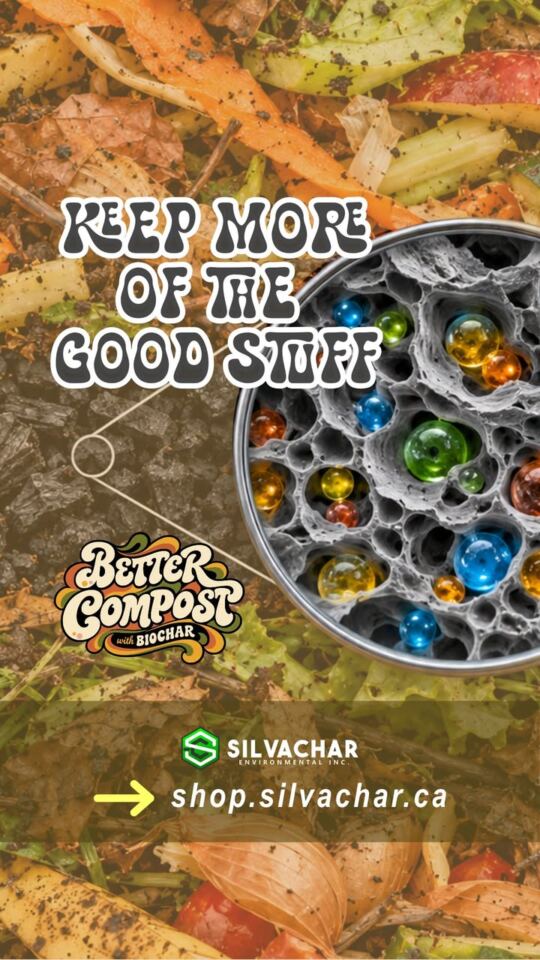
Biochar contains a network of pores that will retain water and nutrients in the root zone. This will reduce losses, support more efficient irrigation and fertilization, and create a more dependable reserve during crop stress.

Useful for: sandy soils, container mixes, drought-prone sites, turf, gardens, and intensive growing systems.

03

Builds Soil Health

Healthy soil needs air, moisture, nutrients, organic matter, and active biology. Biochar will help create durable pore space and habitat for beneficial microorganisms while supporting soil structure and nutrient availability.

Useful for: compacted or tired soils, raised beds, compost blends, lawns, restoration sites, and long-term soil recovery.

04

Improves Resource Efficiency

Keeping more water and nutrients where they are needed will help growers, grounds teams, and homeowners get more value from each application. Biochar keeps working in the soil, making it a long-term solution rather than a short-lived treatment.

Useful for: operations managing irrigation, fertilizer, labour, compost, or growing-media costs.

05

Long-Term Carbon Storage

Pyrolysis converts woody biomass into a stable form of carbon. When Biochar is put into soil or other physical environment, much of that carbon will remain stored for centuries while the material provides ongoing practical benefits.

Useful for: climate-conscious growing, land restoration, circular-economy projects, and durable carbon-management strategies.

06

BC Wood Waste Recycled

Silvachar transforms clean, non-merchantable forest wood waste into a useful, value-added product. The result connects carbon capture, forestry, agriculture, site restoration, filtration, and carbon storage in one practical circular system.

Useful for: organizations seeking local Canadian Biochar with a clear connection to forest-residual recovery.

Questions, answered

Before you use Biochar.

Application rate and preparation matter. Use these answers as a starting point, then speak with Silvachar about your soil, water, growing system, or project.

What does Biochar do for soil?

Biochar will help soil retain water and nutrients, improve pore space and aeration, and provide habitat for beneficial microorganisms. Results depend on the soil, Biochar properties, application rate, and how it is prepared.

Does Biochar replace fertilizer?

No. Biochar is a soil amendment and nutrient-retention tool, not a complete fertilizer. It is often most effective when charged or blended with compost, manure, fertilizer, or another nutrient source before application.

How much Biochar do I need?

The amount depends on the area, soil condition, crop, and application. Use the Silvachar AI calculator for a starting estimate, then confirm the plan for larger or specialized projects.

How will Biochar help with filtration and odour control?

Biochar's high surface area will support adsorption, moisture management, filtration-media applications, and odour-control systems. The required grade and design depend on the material being treated.

Is Biochar a carbon-storage solution?

Biochar production converts part of the carbon in woody biomass into a stable form. Durable use in soil or other long-lived applications will keep much of that carbon stored while the Biochar performs a useful function.

Start with the right plan

Find the right Biochar and amount for your project.

Use our AI calculator to find out how much Biochar you need for your project, or click “Talk to a Biochar specialist” below.

Contact Silvachar

Talk to a Biochar specialist.

Tell us what you are growing, restoring, filtering, or planning. Our Salmon Arm team will help you find the right Biochar solution and amount for your project.

Silvachar Environmental Inc.

Made in British Columbia.
Ready for your project.

Start a conversation

How can we help?

Your message will be sent directly to contact@silvachar.ca. By submitting it, you consent to our use of the information to respond to your inquiry. Read our Privacy Policy.