Water Retention
Porous Biochar may help retain moisture in the root zone, particularly in fast-draining or degraded soils.


Biochar for farms supports long-term soil improvement, greenhouse production, nutrient management and practical manure and bedding systems. The right approach depends on your soil, crop, livestock operation and project scale.
Biochar is a stable, porous carbon amendment. When it is matched to the soil and combined with compost, managed manure or fertilizer, it can become part of a long-term soil program for fields, greenhouses, orchards and other growing operations.

Porous Biochar may help retain moisture in the root zone, particularly in fast-draining or degraded soils.
Its surfaces can interact with nutrients, helping reduce leaching and keep more value in the managed soil system.
Biochar can contribute exchange sites that help soil hold positively charged nutrients such as calcium, magnesium and potassium.
Pores provide protected microsites where beneficial soil microorganisms can interact with moisture, nutrients and roots.
Biochar adds a durable carbon structure that remains in soil far longer than fresh organic matter.
Depending on the Biochar and starting soil, it may help improve acidic or degraded soils as part of a broader management plan.
A long-term field study reported that one Biochar application continued to influence soil after more than 10 years, including higher soil pH, cation exchange capacity, retained nutrients and soil organic carbon. Crop responses and the most effective rate varied, reinforcing the need to match Biochar to the soil and crop.
Read the university research summary ↗In a six-year study of degraded calcareous soil, one-time organic amendments increased water retention. The treatment combining 1% Biochar with 2% manure produced the strongest and most consistent plant-available water result among the tested treatments.
View the USDA study record ↗Important: Results vary with soil texture and pH, Biochar feedstock and production conditions, particle size, crop, climate, fertility program and application rate. Biochar should not be presented as a guaranteed yield increase. Start with the soil and the production goal.
Across cattle barns, poultry coops, goat and sheep pens, and other livestock facilities, Biochar can be added to bedding and manure-management systems to help manage moisture, ammonia-related odour and nitrogen. After use, the Biochar-enriched bedding and manure can be properly composted and returned to the farm as a valuable soil amendment.
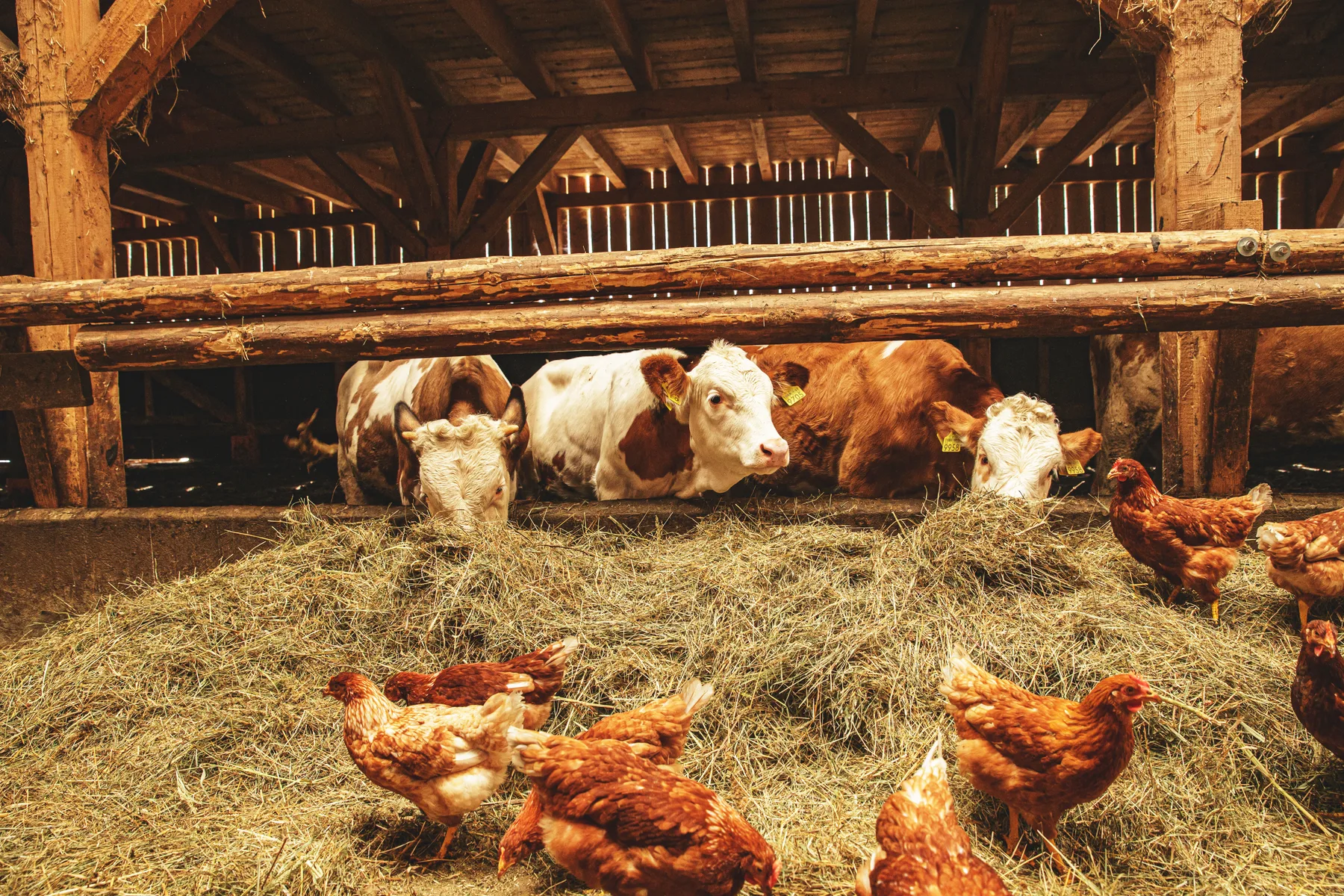
Biochar can be incorporated into bedding and manure systems where moisture and odour require active management.
Biochar can reduce ammonia emissions and improve nitrogen retention in well-managed bedding and manure systems—helping control ammonia-related odour while keeping more nitrogen in the material for composting.
Used bedding and manure can be composted with Biochar to create a more valuable soil amendment while recycling farm nutrients.
Cornell reports that adding Biochar during composting can reduce ammonia and nitrogen losses, improve compost quality and help reduce odour pollution from manure and organic waste. Performance depends on the materials and composting process.
Read the Cornell research summary ↗Controlled poultry-litter composting studies published in Waste Management and the Journal of Environmental Quality found lower ammonia losses and better nitrogen retention in specific Biochar treatments. These findings support Biochar as a manure-composting amendment; they do not guarantee identical results in every facility.
For pile building, charging methods and practical compost guidance, continue to SilvaChar’s dedicated Biochar for Compost page.
Read the Biochar for Compost GuideTell us what you are growing, restoring, filtering, or planning. Our Salmon Arm team will help you find the right Biochar solution and amount for your project.