
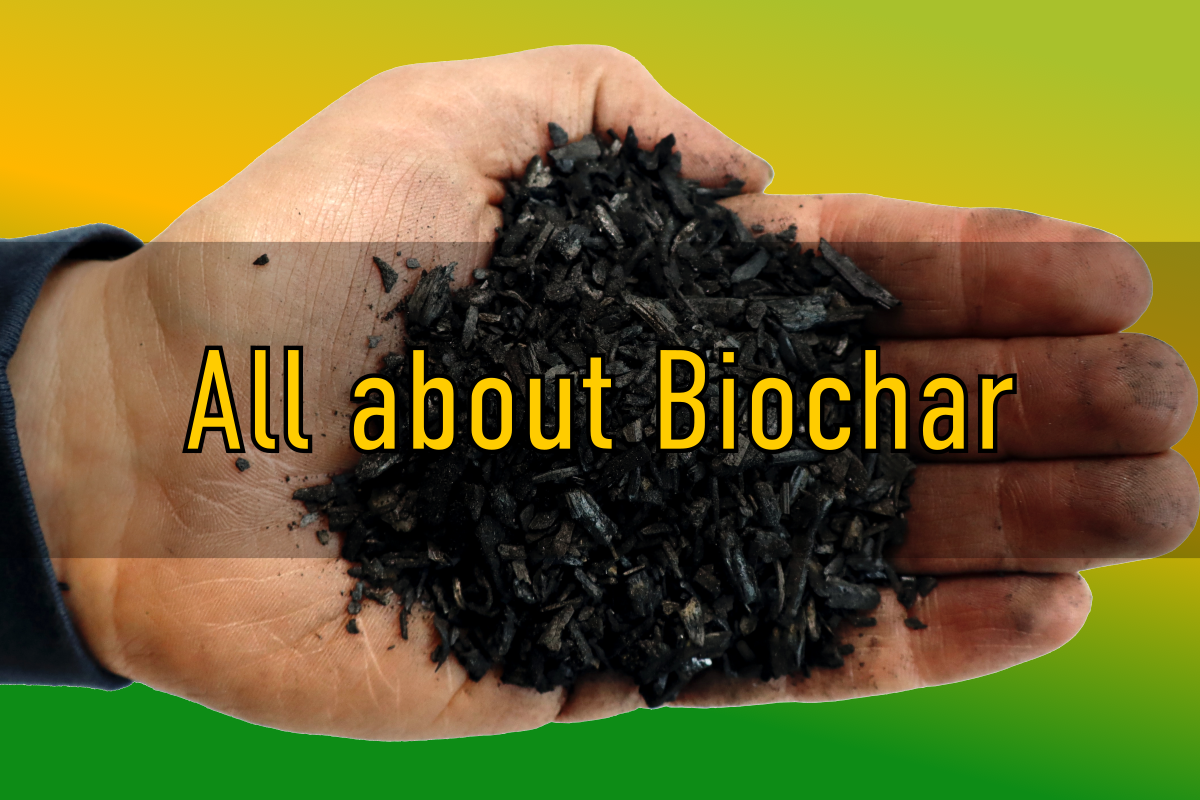
What Is Biochar?
The Ultimate Beginner’s Guide to Healthier Soil & Sustainable Growing
If you’ve recently heard people talking about biochar, you’re not alone.
In 2026, biochar continues to gain attention from gardeners, farmers, landscapers, municipalities, and environmental professionals looking for sustainable ways to improve soil while helping remove carbon from the atmosphere.
But what exactly is Biochar?
This beginner-friendly guide answers the most common questions and explains why biochar has become one of the fastest-growing soil amendments in agriculture and environmental restoration.
What Is Biochar?
Biochar is a stable, carbon-rich material produced by heating clean organic biomass, such as wood chips, in a low-oxygen environment through a process called pyrolysis.
Unlike ordinary charcoal used for cooking, biochar is specifically produced for agricultural, environmental, and industrial applications.
Its microscopic pore structure allows it to retain water, nutrients, and beneficial microorganisms while remaining stable in soil for hundreds to thousands of years.
How Is Biochar Made?
Biochar begins with clean organic waste that would otherwise decompose or be burned.
The organic material is heated to high temperatures in a controlled, low-oxygen environment. This process, known as PYROLYSIS, transforms the biomass into stable carbon while preserving its highly porous structure.
At SilvaChar, biochar is produced from Canadian forestry residuals that support the circular economy by converting underutilized wood waste into a valuable long-term environmental product.
Why Is Biochar So Effective?

The secret lies in its structure.
Imagine a sponge, but on a microscopic level. Millions of tiny pores create an enormous internal surface area capable of holding:
- Water
- Plant nutrients
- Air
- Beneficial microbes
Instead of nutrients washing away after heavy rain or irrigation, biochar helps keep them available within the plant root zone.
How Does Biochar Help Soil?
It Holds Water: The porous structure stores moisture and slowly releases it to plant roots, helping reduce drought stress and irrigation needs.
It Retains Nutrients: Nitrogen, phosphorus, potassium, and other nutrients remain available longer instead of leaching below the root zone.
It Supports Healthy Soil Biology: Beneficial bacteria and fungi colonize biochar’s pores, creating ideal habitats for microbial communities that naturally improve nutrient cycling.
It Improves Soil Structure: Whether working with sandy or clay soils, biochar can help create better aeration, drainage, and root development over time.
Can Biochar Replace Fertilizer?
No.
This is one of the most common misconceptions. Biochar contains relatively few plant-available nutrients on its own. Instead, it improves the efficiency of fertilizers and compost by helping retain nutrients where plants need them most.
More details about Biochar vs Fertilizer on this link
Why Should Biochar Be Charged First?
Fresh biochar acts like a sponge. If applied directly, it may temporarily absorb nutrients already present in the soil. Pre charging Biochar fills all those microscopic pores with nutrients first. We recommends blending biochar with compost, manure, or fertilizer before application for the best growing results.
Ratios
Compost or Manure:
Mix 9 parts compost or well-aged manure with 1 part Biochar. Keep the mixture slightly moist and let it sit for about two weeks (recommended). During this time, the Biochar absorbs nutrients and beneficial microbes, making them available to your plants.
Liquid Fertilizer:
Mix 1 part liquid fertilizer with 1 part Biochar. If the Biochar absorbs all the liquid, you can add more fertilizer, up to a 2:1 ratio (liquid to Biochar). Let it soak for 48–72 hours for the best results, or 24 hours if you’re short on time.
After this Silvachar Biochar is ready to be mixed with your soil.
Application Rate: Add charged Biochar at about 10% of the soil volume. For example, if you are mixing 10 gallons of soil, use about 1 gallon of charged Biochar.We recommend 10% of the mix to the soil volume.
Where Can Biochar Be Used?
One of biochar’s biggest advantages is its versatility. It can be used in:
- Home gardens
- Raised beds
- Vegetable gardens
- Flower gardens
- Lawns
- Greenhouses
- Farms
- Vineyards
- Orchards
- Nurseries
- Compost systems
- Landscaping
- Golf courses
- Land reclamation
- Water filtration systems
- Industrial environmental projects
Because biochar remains stable for centuries, one application can continue delivering long-term benefits.
Does Biochar Help the Environment?
Yes.
Biochar is recognized worldwide for its carbon sequestration potential. Trees naturally capture atmospheric carbon dioxide during growth. Instead of allowing that carbon to return to the atmosphere through decomposition or burning, pyrolysis locks much of it into a stable carbon form that can remain in soil for centuries. Trees naturally capture CO₂… When wood is processed into biochar its molecular structure changes and becomes very stable, storing carbon for centuries.
This makes biochar one of the few technologies capable of simultaneously improving agriculture while removing carbon from the atmosphere.
What Does Current 2026 Research Show?
Recent 2026 publications continue to support many of biochar’s established benefits.
Researchers consistently report improvements in:
- Soil water retention
- Nutrient-use efficiency
- Soil microbial activity
- Root development
- Long-term carbon storage
- Reduced nutrient leaching
- Greater resilience during drought conditions
Universities and environmental organizations also continue studying biochar’s role in regenerative agriculture, climate resilience, mine reclamation, and water treatment, with growing interest across Canada and internationally.
Sources: 1. Predicting Biochar Water Retention at High Suctions from Routinely Measured Properties Across Feedstocks and Production Technologies. Biomass and Bioenergy, Vol. 213 (2026). DOI: 10.1016/j.biombioe.2026.109451. 2. Sharma, P., Ali, S., Shrivastava, A., et al. (2026). Application of Biochar in Agriculture for Effective Water Resource Conservation. Discover Soil, Volume 3, Article 51. 3. Soothar, M.K., Yang, Y., Qi, Y., et al. (2026). Biochar Application Improves Chemical Properties and Nutrient Availability in Saline–Alkali Soils: A Meta-Analysis. Land Degradation & Development. DOI: 10.1002/ldr.70742.
Frequently Asked Questions
Is biochar the same as charcoal?
No. While both are carbon-rich materials, biochar is specifically produced for soil, environmental, and industrial applications.
Does biochar expire?
No. Biochar is remarkably stable and can remain in soil for hundreds—or even thousands—of years.
Can you use too much biochar?
Like any soil amendment, proper application rates matter. Most gardens benefit from incorporating approximately 5–10% biochar by soil volume, especially when it has been properly charged.
Will biochar change my soil pH?
Depending on the feedstock and production process, biochar can slightly increase soil pH. Testing your soil before application is always recommended.
Can biochar reduce watering?
Yes. Its porous structure improves water retention, often reducing irrigation needs during dry periods.
Does biochar work in clay soil?
Yes.
Coarser biochar can improve aeration and soil structure in heavier clay soils.
Does biochar work in sandy soil?
Absolutely. Fine biochar is particularly effective at improving water and nutrient retention in sandy soils.
Can I add biochar to compost?
Yes. Many growers mix biochar directly into compost piles to help retain nutrients and create nutrient-rich compost.
Is biochar safe for vegetable gardens?
When produced from clean, untreated biomass, high-quality biochar is widely used in vegetable production, home gardens, and commercial agriculture.
How long does biochar keep working?
Unlike compost or fertilizers that break down over time, biochar continues improving soil for many years after application.
Final Thoughts
Biochar isn’t a miracle product, but it is one of the most scientifically supported long-term soil amendments available today.
By improving water retention, reducing nutrient loss, supporting beneficial microbes, and storing carbon for centuries, biochar offers lasting benefits for gardeners, farmers, landscapers, and environmental professionals alike. Whether you’re growing vegetables in a backyard garden, managing agricultural land, restoring disturbed soils, or improving compost, adding properly charged, high-quality biochar can be a valuable investment in healthier soil and more resilient growing systems.
Ready to Experience the Benefits of Biochar?
If you’re ready to improve your soil, increase water and nutrient efficiency, and support long-term environmental sustainability, visit our store to explore SilvaChar’s premium Canadian-made biochar products. Whether you’re a home gardener, commercial grower, or industry professional, we have solutions designed to help you grow better while building healthier soils for the future.
👉 Visit our store today. Click here

No responses yet