

Is your lawn really getting the most out of every watering? Fix it Now!
Most homeowners think a greener lawn starts with more fertilizer or more irrigation. In reality, it starts with healthier soil. One of the biggest challenges lawns face is that soil often can’t hold enough water or nutrients. On hot summer days, moisture evaporates quickly, and valuable nutrients can wash deeper into the soil before grass roots have a chance to use them.
That’s where BIOCHAR comes in.
Biochar is a highly porous, carbon-rich material that works like millions of tiny underground reservoirs. Those microscopic pores help hold water and nutrients in the root zone, where they’re available when your lawn needs them most.
A 2024 study, “Effects of Biochar and Compost on Turfgrass Establishment in Urban Soils” by The University of California, Riverside found that biochar improved conditions for turfgrass establishment and supported healthier root development. Stronger roots lead to healthier, more resilient grass that is better equipped to handle heat, drought, and everyday stress.
Also, according to a three-year field study published in the Journal of Environmental Quality, biochar significantly improved nitrogen management in agricultural soils. The researchers reported that biochar reduced nitrogen leaching by 60% in plots fertilized with inorganic fertilizer, demonstrating its ability to retain nutrients within the soil profile and improve fertilizer efficiency over time. The study suggests that incorporating biochar into nutrient management practices can help reduce nutrient losses while making more nitrogen available to plants.
Why homeowners are turning to biochar:
✔ Improves soil structure – Sandy or Clay soils get fixed.
✔ Helps retain moisture longer – The porous structure retains water longer.
✔ Supports healthier root growth – Roots have immediate access to good nutrients retained by Biochar.
✔ Reduces nutrient loss – Biochar reduces leaching so nutrientes stay in the rooting zone.
✔ Encourages beneficial soil microbes – Microbes find a Five Star Hotel within the Biochar ⭐⭐⭐⭐⭐
✔ Promotes a thicker, healthier lawn over time – Lawns get benefited by the Biochar water retention properties.
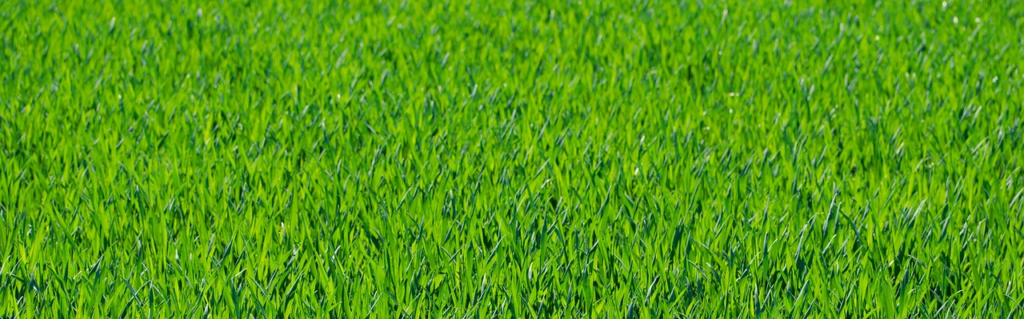
Unlike fertilizers that are used up after a season, biochar stays in the soil for years, continuing to improve soil health long after it’s applied.
A heavier application at the beginning, followed by a few lighter applications over the next couple of seasons, helps build healthier soil beneath your lawn. Over time, this creates a long-lasting underground sponge that stores water and holds onto nutrients from future fertilizer applications, making them available to your grass when it needs them most.
See Our Biochar Lawn Trial Results
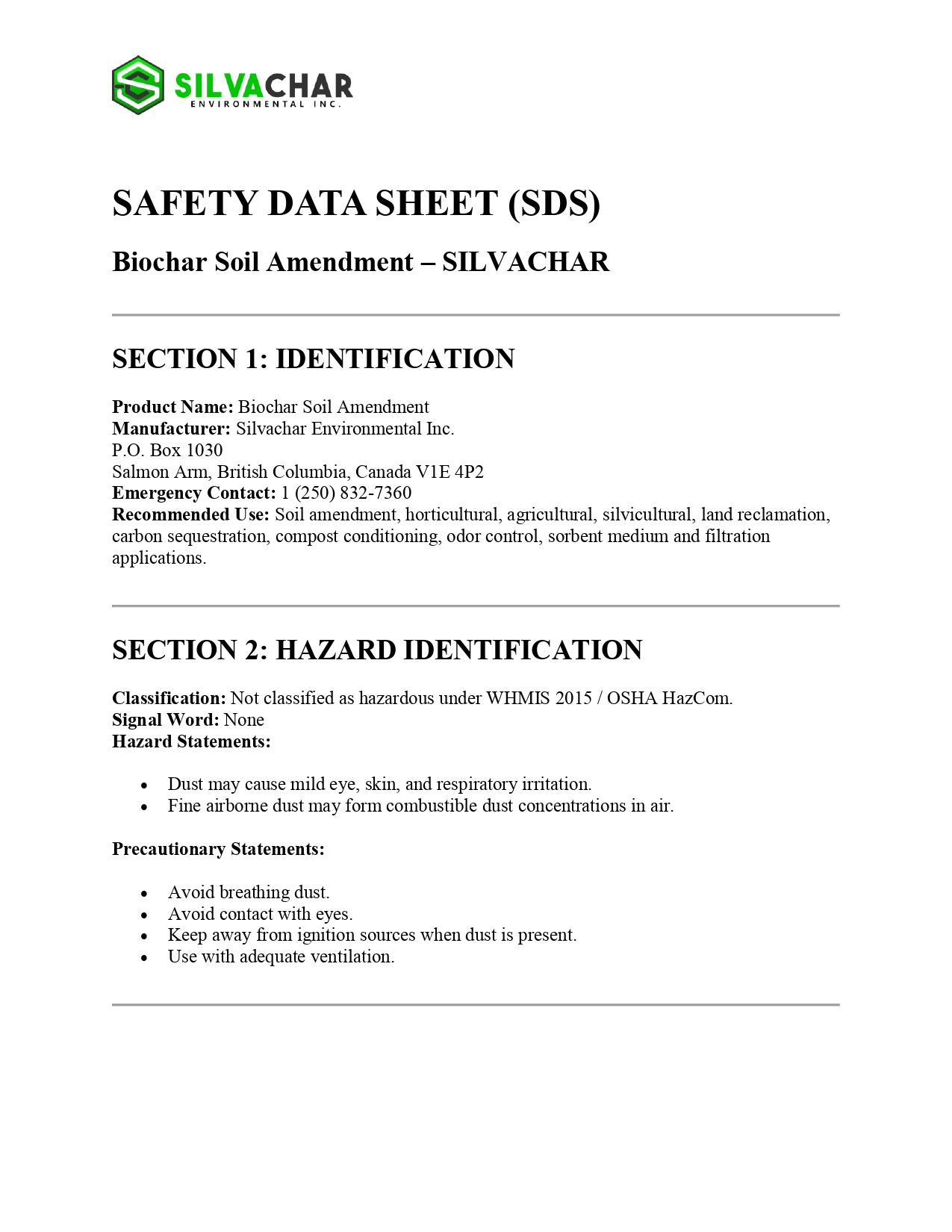
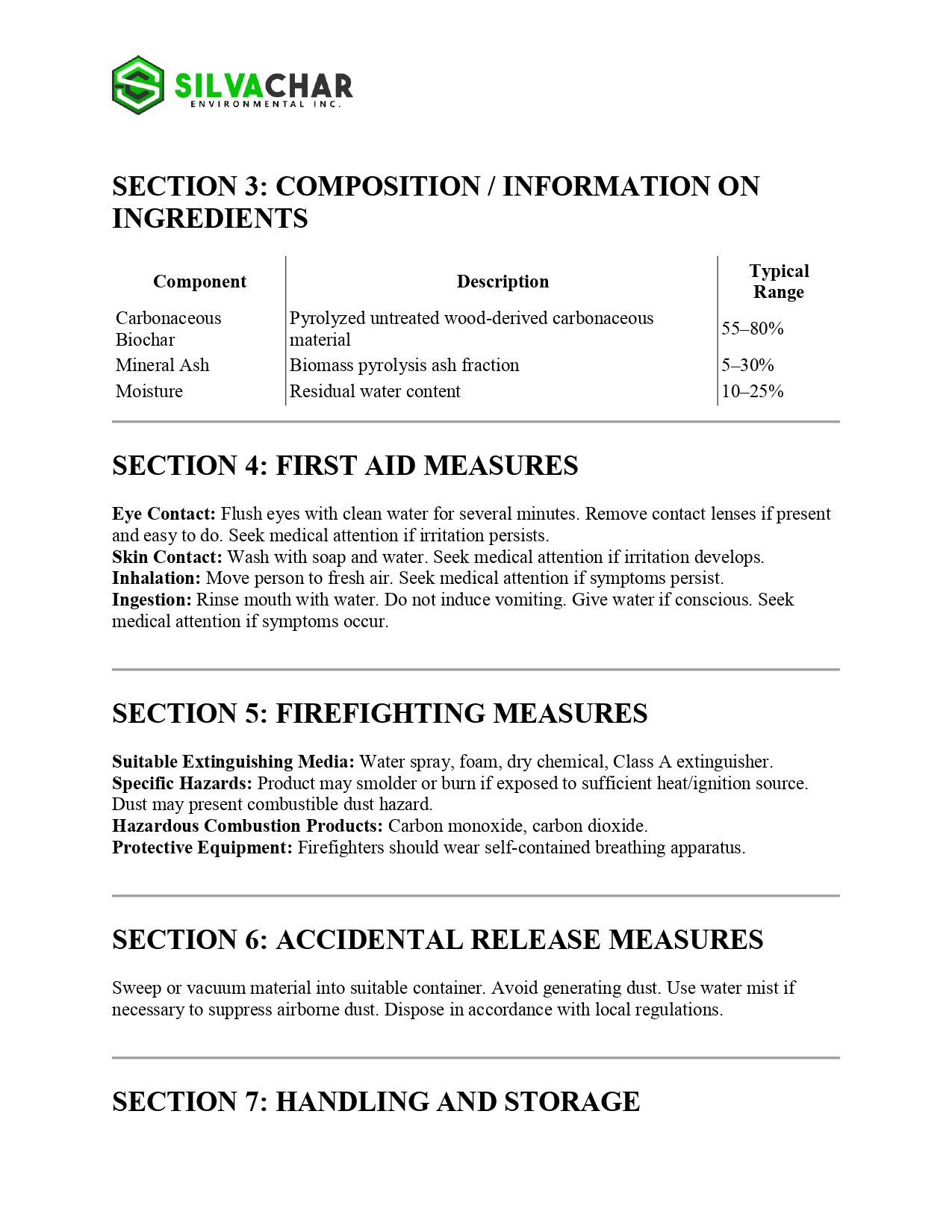
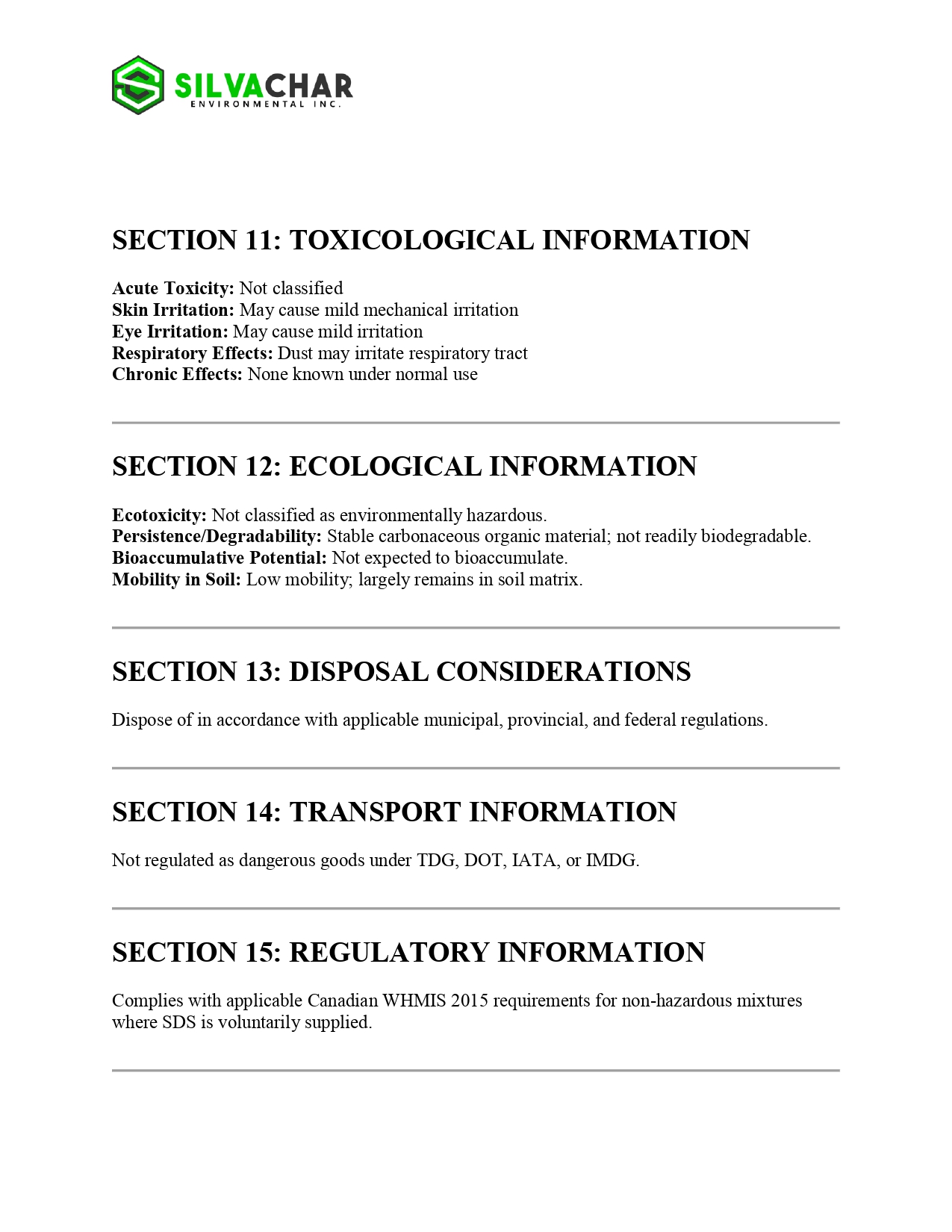
How to Use Silvachar Biochar
- Apply 1 bucket of Biochar per 1,000 ft² of lawn for general soil improvement.
- For lawns that are heavily damaged, thin, or have many bare patches, we recommend a double application (2 buckets per 1,000 ft²) to help rebuild the soil more quickly.
- Activate (or “charge”) the biochar by applying it with an equal amount of high-nitrogen granular fertilizer. This fills the biochar’s pores with nutrients, allowing it to store and gradually release water and nutrients where the roots need them most.
- Water the lawn well after application to help move the biochar into the root zone.
- If your lawn has bare or thinning areas, overseeding after applying biochar can help establish thicker, healthier grass while the soil is improving.
Pro Tip: A heavier application now, followed by a few lighter applications over the next couple of seasons, helps build rich, healthy soil beneath your lawn. Once established, the biochar continues acting like a long-lasting underground sponge, holding water and nutrients from future fertilizer applications to support a greener, healthier lawn for years to come.
Healthy lawns don’t just happen, they’re built from the soil up.
Ready to give your lawn a stronger foundation?
👉 Learn more and get Biochar for your lawn here: Click here
Get a discount at the checkout and free shipping within Canada.
Studies source:
Montgomery, J. F., Crohn, M. R., Horney, M. A., Becker, Y., Baird, J., McGiffen Jr., M. E., & Silva-Flores, J. B. (2024). “Effects of Biochar and Compost on Turfgrass Establishment in Urban Soils.” Agronomy, 14(5), 960.
Lu, Y., Silveira, M. L., O’Connor, G. A., Vendramini, J. M. B., Erickson, J. E., Li, Y. C., & Cavigelli, M. A. (2020). Biochar impacts on nutrient dynamics in a subtropical grassland soil: 1. Nitrogen and phosphorus leaching. Journal of Environmental Quality, 49(5), 1408–1420.


No responses yet